Mastercard's Interactive Map
How location data became an immersive discovery tool that drove 55% new users into the Mastercard ecosystem.
Creative DirectionWebsite DevelopmentIllustration
Mastercard
How location data became an immersive discovery tool that drove 55% new users into the Mastercard ecosystem.
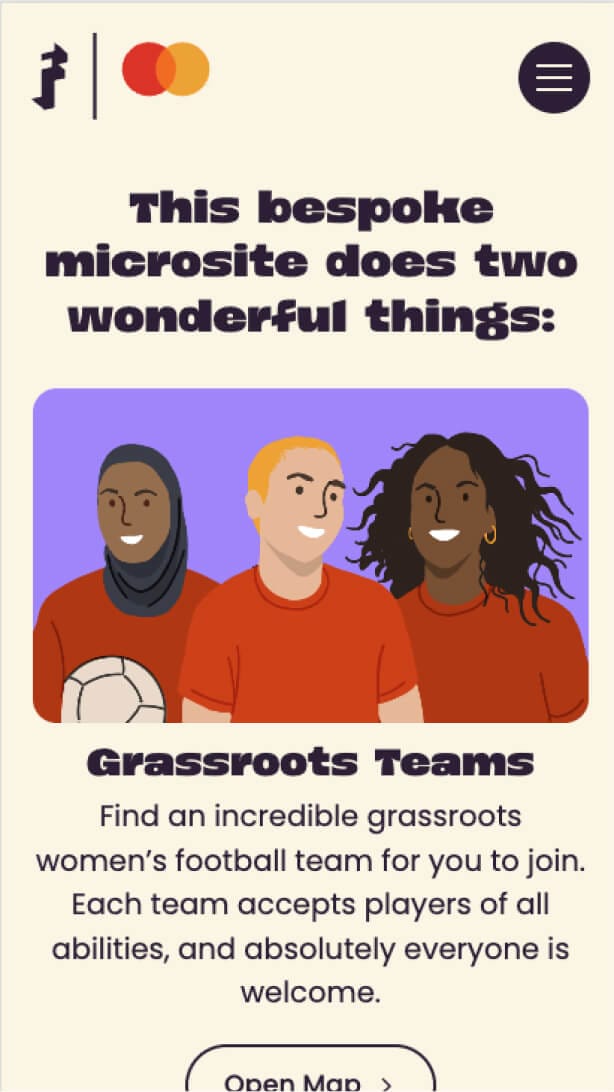
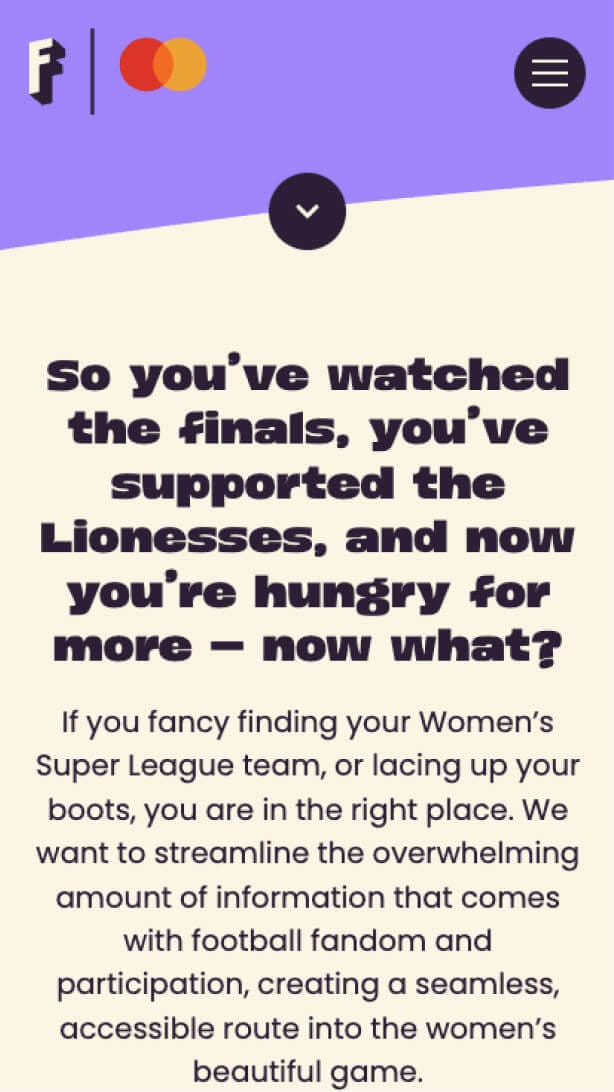

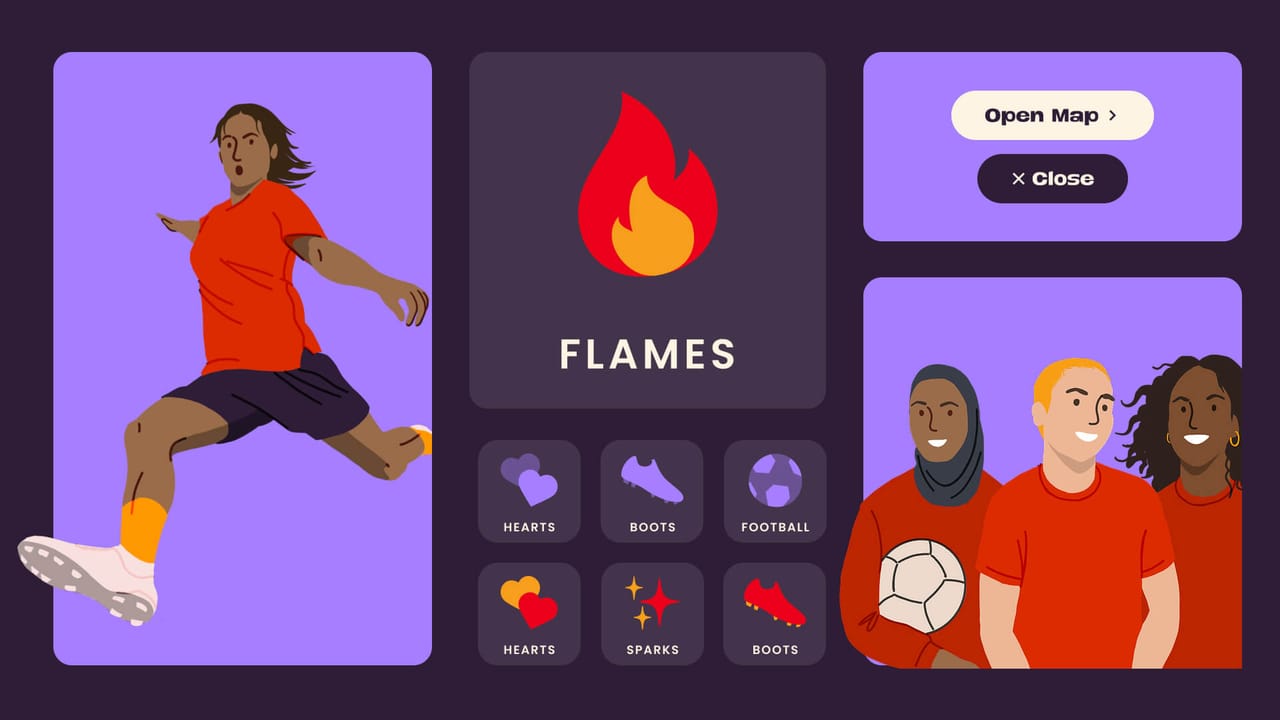
Mastercard and Freeda Media set out to increase meaningful participation in grassroots football by helping more women find local clubs and actually show up. The goal was not awareness for its own sake, but real-world turnout.
This is where campaigns like this often lose momentum. Converting interest into action usually requires a sign-up form, and forms create friction. People drop off before they have even found a club worth joining. The challenge, then, was clear: how do you transform what is effectively a spreadsheet database of location data of grassroots football teams into an experience for women footballers who want to explore, and feel compelled to act on? The experience created 73% interactive engagement from users using the map for discovery and 55% new users engaging over the campaign duration.
Most campaigns relegate location data to the backend and let a sign-up form do the talking. We inverted that logic: the dataset became the interface, designed for exploration rather than completion. From the earliest sketches, representation was treated as infrastructure, with illustrations of Black women, women in hijabs, and women with short hair so more players could see themselves in the experience before choosing to engage. And because behaviour change rarely fits inside a media window, we engineered the experience to endure, continuing to drive discovery long after the media spend tapered off.
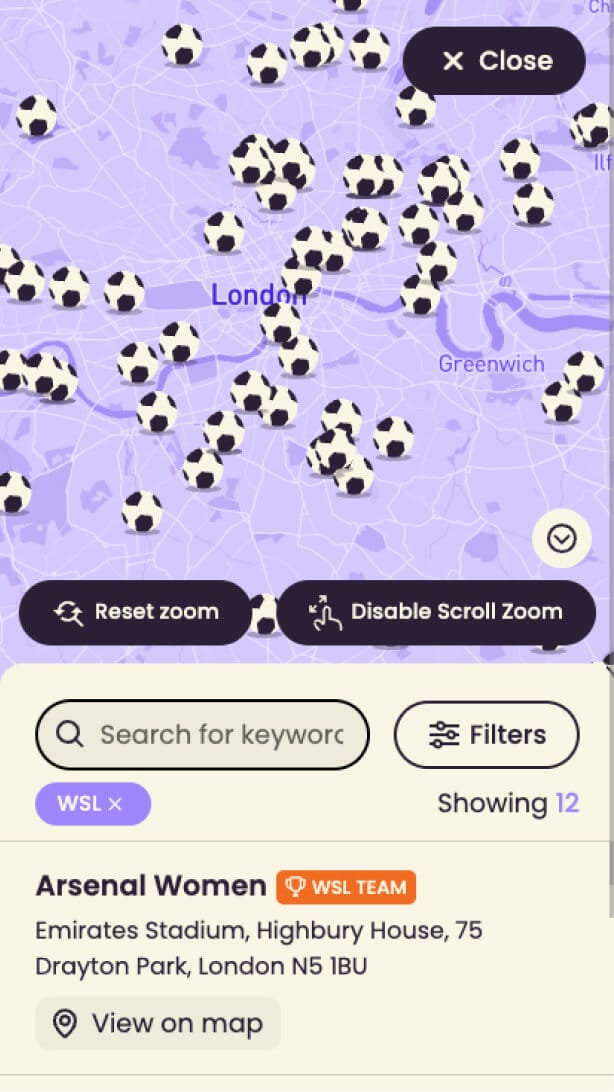
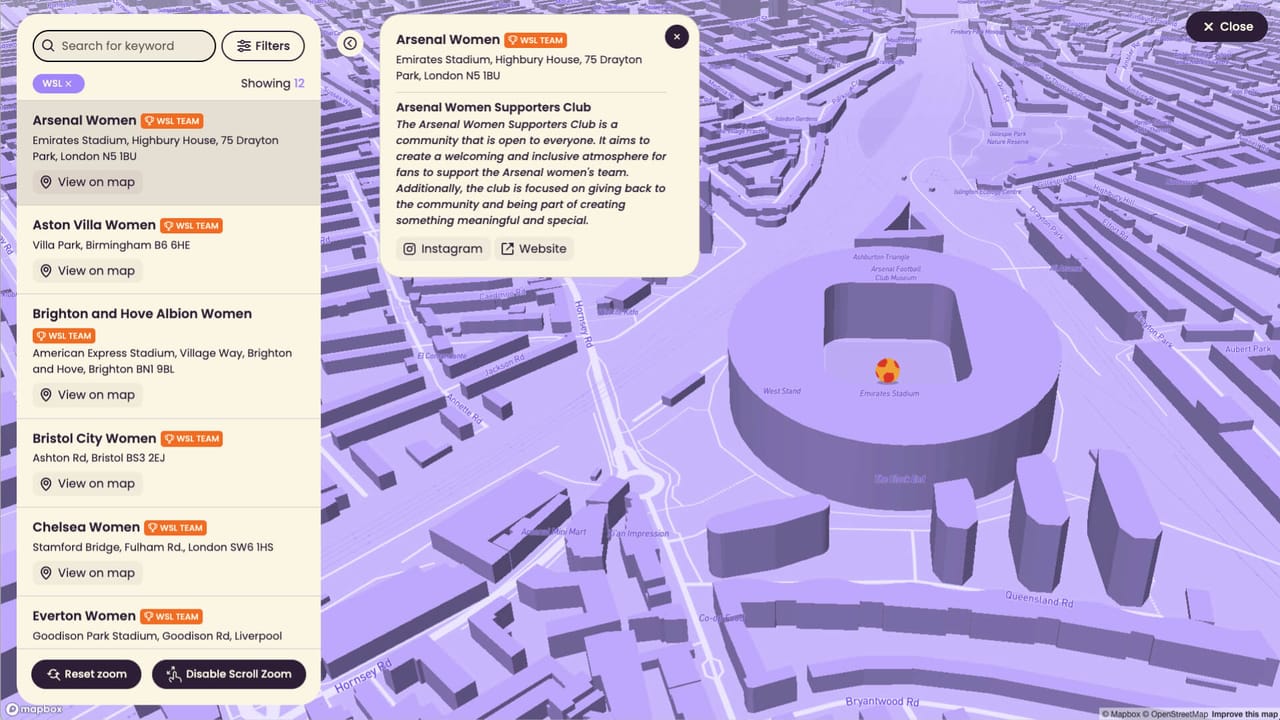
We custom built the microsite experience using Webflow and Mapbox. Creating an interactive grassroots team map with filters for location, inclusivity info, contact details, and social links and engaging quote blurbs. A dedicated, scrollable section for the Women's Super League teams. Football animations, player movements, and loading screens like "warming up the players" that made the whole thing feel like a game, not a location directory.
The map did the heavy lifting. Nearly three quarters of everyone who landed actively used it, with 1.6K map interactions in a short window. Most branded content measures engagement in single digits. This got people playing.
It also pulled in new faces. 55% of users were new, so the campaign reached women the brand hadn't before, not just its existing audience. And the early repeat-visit signal suggests some came back to the experience rather than treating it as a one-and-done.
The bigger win is what it left behind. Because it was built to last beyond the campaign, women could still open the map and find their local team even after it finished.
Let's talk
Every project starts with a conversation. Tell us what you're building toward and we'll take it from there.